
Aging clay laterals
Clay sewer pipe cracks, shifts and separates at the joints over decades. Tree roots find the openings and grow into the pipe, narrowing it until a heavy rain tips it into a backup.
A sewer backup in a Kelso home is Category 3 water: water carrying sewage, bacteria and viruses, and it is not safe to clean up with a mop and a household cleaner. Aging clay and early PVC laterals, a high water table and storm-overwhelmed sewers make backups a real pattern here, especially after heavy rain. One call starts the removal, cleaning, disinfection and drying.
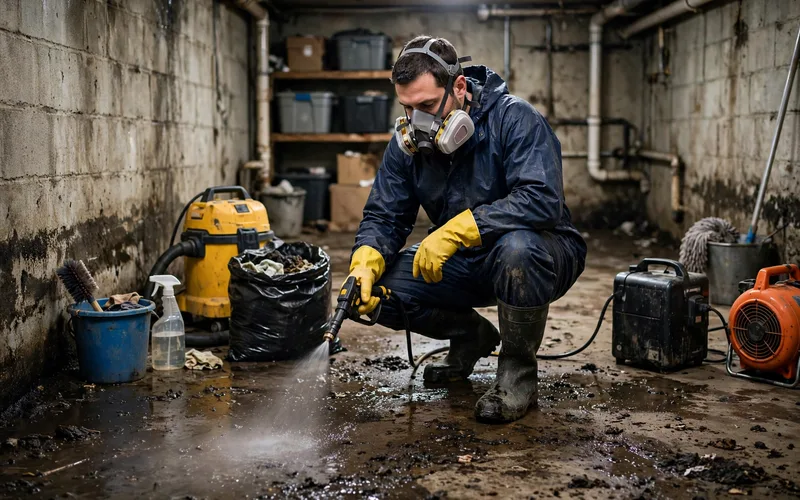
Call (877) 659-0178 for sewage cleanup anywhere in Kelso, WA. Sewage is Category 3 water, carrying bacteria, viruses and other contaminants that can make people sick. Do not touch it, do not walk through it, and do not flush toilets or run water until the backup is cleared. Sewage is removed first, then the area is cleaned, disinfected and dried.
A backup usually surfaces through a floor drain or a basement toilet after heavy rain. Read the sewer backup cleanup guide, and how a backwater valve can stop the next one. The full list of restoration work is on the services hub.
Kelso's sewers carry two loads at once: the homes they serve, and the groundwater that pushes in through every crack. Most Kelso homes were built before 1980, the median home dates to 1963, and the sewer lateral under a house is usually as old as the house itself. Clay pipe cracks and shifts at the joints, and early PVC sags and separates. When the water table rises after heavy rain, groundwater forces its way in and the system can push sewage back into the lowest fixtures.
That is why backups in Kelso cluster around storms. An atmospheric river can drop inches of rain in a single day, the rivers rise, the water table follows, and the first sign is often sewage coming up through a basement floor drain the morning after the storm. Backups also happen in dry weather, when a cracked lateral blocks or roots close a pipe off. If water is coming up now, call (877) 659-0178 first and read later.
Clay sewer pipe cracks, shifts and separates at the joints over decades. Tree roots find the openings and grow into the pipe, narrowing it until a heavy rain tips it into a backup.
Kelso sits on a diked floodplain, and the water table rises with the rivers. Pressurized groundwater infiltrates cracked laterals during the wet months.
About 48 inches of rain a year falls mostly from October to March. When a storm pushes the system past capacity, sewage takes the lowest way out, often a basement drain.
Floor drains and basement toilets sit below the street sewer. When pressure builds in the line, sewage surfaces through those openings first.
Grease hardens inside pipes, and anything flushed that should not be flushed narrows the line further. A partial blockage can hold for months, then fail in the first big storm.
A backwater valve is a one-way fitting that stops sewage flowing back into a house. Many older Kelso homes were built without one.
Sewage cleanup follows a fixed order. Removal comes first, then cleaning, then disinfection, then drying.
Call (877) 659-0178 and describe what you can see: where the sewage is, how deep it is, and whether it is still coming in. Stay out of the affected area, and do not flush toilets or run taps, dishwashers or washing machines.
Sewage and contaminated water are extracted, and materials that cannot be cleaned, such as soaked carpet padding and saturated drywall, are removed. Hard surfaces are cleaned down so disinfection can reach them.
The area is disinfected, then dried with air movers and dehumidifiers. Moisture readings confirm when walls and floors are dry, because sewage water left in materials leads straight to mold.
Short answer: almost nothing in the affected area until it has been cleaned and disinfected. Category 3 water carries bacteria and viruses, and it soaks into porous materials that can look dry on the surface.
| Do this | Do not do this |
|---|---|
| Stay out of rooms with sewage water | Walk through sewage in bare feet or open shoes |
| Keep children and pets out of the affected area | Touch sewage water or anything soaked in it |
| Stop using water: no flushing, no taps, no laundry | Use a household vacuum or mop on sewage |
| Take photos from a safe distance for insurance | Throw away damaged items before documenting them |
| Call (877) 659-0178 and describe what you found | Wait to see if the water goes away on its own |
Sewer backups follow the age of the pipe as much as the weather. The 1920s and 1940s bungalows around Old Kelso Hill and the mid-century ranches in Butler Acres sit on some of the oldest laterals in the city, and the riverfront streets of South Kelso sit low enough that groundwater reaches them first.
Coverage is Kelso only, across ZIP code 98626, from West Kelso across the Cowlitz River to Lexington at the north end. Backups peak in the wet months from October to March. See the full breakdown on the Kelso service area page.
Water or sewage coming up through a floor drain or a basement toilet after heavy rain. What is safe to touch and what to do first.
Sewer backup cleanupA one-way valve that stops sewage flowing back into your home. How it works, and why older Kelso homes without one back up first.
Backwater valve: how it stops backupsBasement floods are a documented Kelso pattern, and sewage often arrives with them. Extraction, drying, and the entry point identified.
Basement flooding in KelsoYes. Sewage is Category 3 water, carrying bacteria, viruses and parasites. Cleaning it without protective equipment and proper disinfection leaves contamination in flooring, drywall and framing. Stay out of the affected rooms until the work is done.
Stop using water right away: do not flush toilets or run taps, dishwashers or washing machines, because every gallon adds to the backup. Stay out of the sewage water and call (877) 659-0178. Take photos from a safe distance if you can.
Heavy rain raises Kelso's water table, and groundwater forces its way into cracked or aging sewer laterals. When the system is overwhelmed, sewage takes the lowest exit, usually a basement floor drain or toilet. It is a common Kelso pattern after big storms.
A backwater valve is a one-way fitting on the sewer line that lets wastewater out and stops sewage flowing back in. It is one of the most effective protections for a Kelso home that has backed up before.
Sewer backup is often a separate endorsement on a homeowners policy, sometimes called a water backup endorsement, rather than part of standard cover. Document the damage with photos and drying records, and call (877) 659-0178 for help with the cleanup side of a claim.
Removal and cleaning usually start on the first visit. Drying takes longer and depends on how much water soaked in and which materials were affected. Drying is finished when moisture readings show the structure is dry, not when the surface looks dry.
Yes, if the area is not dried properly. Mold can start growing within 24 to 48 hours on wet drywall, wood and carpet, and sewage water makes the risk worse. That is why disinfection is always followed by drying with air movers and dehumidifiers.
Sewage water soaks into flooring, drywall and framing every hour it sits. Call now and get removal, cleaning, disinfection and drying started in Kelso.
Call (877) 659-0178