

Water damage left wet
A burst pipe, an appliance leak or a flood mopped up but never dried properly. Water wicks into drywall and framing, and mold starts within 24 to 48 hours.
Mold follows water damage within days in Kelso's wet climate, and it follows it fastest in the places nobody looks: damp crawl spaces, basements and the inside of a wall that got wet and never dried. About 48 inches of rain a year and a high water table keep Kelso homes damp long after a leak is fixed. Remediation starts by fixing the moisture source, then containing the mold, removing it and drying the area.
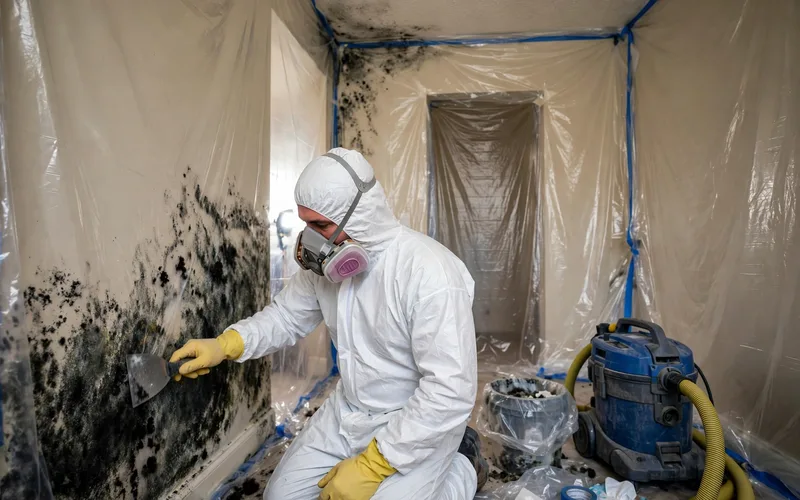
Call (877) 659-0178 for mold remediation anywhere in Kelso, WA. Mold is a moisture problem first and a cleaning problem second: scrubbing the visible growth without fixing the water source means it grows back. The moisture source is fixed first, then the mold is contained, removed and the area dried. Do not disturb a large patch of mold yourself, because that spreads spores through the house.
Mold usually shows up days after a leak, a flood or a wet crawl space. Read about mold after water damage and black mold, or see the full list of restoration work on the services hub.
Mold needs moisture, a surface to grow on, and time. Kelso supplies the moisture, with about 48 inches of rain a year across roughly 180 wet days, and a high water table that keeps crawl spaces and basements damp for months. A leak, a flood or a wet crawl space left undried is enough, and mold can start growing within 24 to 48 hours.
The city's housing stock makes it worse. The median Kelso home was built in 1963, about 75 percent of homes predate 1980, and most stand on crawl spaces rather than slabs. Older homes have more plumbing joints to leak and more hidden spaces where dampness goes unnoticed. A slow leak inside a wall can feed mold for months before a stain or a smell gives it away.
The two terms get used as if they mean the same thing, and they do not. Mold spores are present in every home, so no one can remove every trace of mold from a house. Remediation means the visible growth is removed, the moisture source is fixed, and the area is dried to the point where mold cannot grow back.
That is why a remediation job starts with the water, not the mold. A patch fed by a roof leak returns within weeks if the roof is not fixed. Fix the moisture, remove the growth, dry the structure, and check the readings. That order is the whole job.
A burst pipe, an appliance leak or a flood mopped up but never dried properly. Water wicks into drywall and framing, and mold starts within 24 to 48 hours.
Most Kelso homes stand on crawl spaces, and a high water table keeps them wet for months. Damp soil and standing water feed mold on joists and subfloor year-round. See crawl space water damage.
Hydrostatic pressure, window wells and floor drains let water into basements after storms. A basement that floods and dries slowly can grow mold on every wet surface.
A slow roof leak or a dripping pipe inside a wall feeds mold for months before a stain appears. Kelso's rain and aging roofs make this a common source.
Category 3 water from a sewer backup soaks into materials fast. If the area is not disinfected and dried, mold follows within days.
Cold surfaces in winter, bathrooms without working ventilation, and closed-up rooms all hold moisture in the air. Condensation on walls feeds surface mold.
Three steps, in this order. Skipping the first one is why mold comes back.
Call (877) 659-0178 and describe what you found: where the mold is, what it looks like, and whether there was a leak or a flood. The water source is tracked down first.
The affected area is contained so spores do not spread through the house. Mold growth is removed, and materials that cannot be cleaned, such as saturated drywall and insulation, are taken out.
The structure is dried with air movers and dehumidifiers, and moisture readings confirm when walls, floors and framing are back to normal moisture levels.
Most Kelso mold work starts below the floor. The 1920s and 1940s bungalows around Old Kelso Hill and the mid-century ranches in Butler Acres sit on crawl spaces that have been damp for decades, and the riverfront streets of South Kelso sit low enough that groundwater reaches them first.
Coverage is Kelso only, across ZIP code 98626, from West Kelso across the Cowlitz River to Lexington at the north end. Mold follows the wet season from October to March, but crawl space and basement mold is year-round here. See the full breakdown on the Kelso service area page.
Dark patches on drywall or framing after a leak, and the musty smell that comes with them. What black mold usually means, and when it needs containment.
Black mold after water damageHow fast mold grows after a flood or a leak, where it hides, and why drying in the first days matters more than anything else.
Mold after water damageDrying is finished when moisture readings say so, not when the surface looks dry. Air movers and dehumidifiers for walls, floors and framing.
Structural drying in KelsoMold can start growing within 24 to 48 hours on wet drywall, wood and carpet. In Kelso's wet climate, damp crawl spaces and basements stay wet longer, so professional drying matters more than opening a few windows.
Mold spores are present in every home, so no one can remove every trace of mold. Remediation means the visible growth is removed, the moisture source is fixed, and the area is dried so mold cannot grow back.
Black mold is a term for dark-coloured mold growth, usually on wet drywall or framing after a leak. Whether a particular mold is a health risk depends on the type and the person, and health questions should go to a doctor.
A small patch on a hard surface can be cleaned with household methods and proper protection, but a large patch, mold inside walls, or mold after sewage water needs containment and professional removal.
Because the moisture source was never fixed. Mold returns when a leak keeps dripping, a crawl space stays wet, or a wall was never dried to normal moisture levels.
Yes, and in Kelso it is one of the most common places for it. Most Kelso homes stand on crawl spaces, and a high water table keeps them damp for months.
It depends on the policy and the cause. Mold caused by a sudden water event, such as a burst pipe, is often covered as part of the water damage claim, while mold from long-term dampness usually is not.
Coverage is Kelso only, across ZIP code 98626, including West Kelso, South Kelso, North Kelso, East Kelso, Lexington, Beacon Hill, Butler Acres, Rose Valley, Aldercrest, Mt. Brynion, Hilltop, Davis Terrace, Old Kelso Hill and Mt. Pleasant.
Mold grows while the moisture stays, and every wet day adds to it. Call now, describe what you found, and get the moisture source fixed, the mold removed and the structure dried in Kelso.
Call (877) 659-0178