

High water table
Kelso sits on a diked floodplain. When the rivers rise, the water table rises with them, and groundwater seeps up through crawl space soil.
Most Kelso homes stand on crawl spaces, and a high water table keeps them wet for months. About 48 inches of rain a year, a diked floodplain at 13 feet of elevation, and plumbing that runs through the crawl space add up to the most overlooked water problem in this city: standing water, damp soil and mold growing on the joists, while the only sign upstairs is a musty smell.
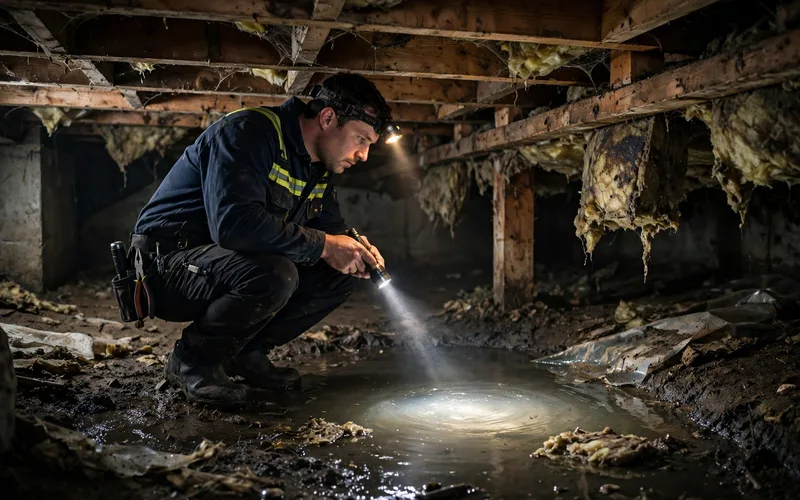
Call (877) 659-0178 for crawl space water damage anywhere in Kelso, WA. Standing water is removed, the space is dried with air movers and dehumidifiers, and the moisture source is tracked down, whether that is groundwater, surface drainage or a leaking pipe. Do not crawl into a wet crawl space yourself: standing water can hide live wiring, sewage and sharp debris.
Crawl space water is usually found by smell, not by sight: a musty odour, damp floors, or warped flooring on the ground floor. See the full list of restoration work on the services hub, and coverage details on the Kelso service area page.
Crawl spaces dominate Kelso construction. Sampled Kelso listings from 1900s bungalows to 1990s homes consistently list crawl space foundations, and the median Kelso home was built in 1963. A crawl space sits close to a water table that rises with the Cowlitz and Columbia rivers, and when the rivers rise after heavy rain, groundwater seeps up through the soil and can sit there for months.
Rain adds to the problem from above. About 48 inches a year falls mostly from October to March, and gutters, downspouts and grading that send water toward the house keep the soil under the house saturated all winter. Plumbing makes it worse still: water lines run through crawl spaces, and a slow leak or a burst pipe in a cold snap can add gallons of water to a space nobody checks.
Kelso sits on a diked floodplain. When the rivers rise, the water table rises with them, and groundwater seeps up through crawl space soil.
About 48 inches of rain a year, concentrated from October to March. Gutters and grading that send water toward the foundation keep the soil saturated.
Water and drain lines run through crawl spaces in most Kelso homes. A slow leak can add water for months before anyone notices.
Hard freezes split unprotected pipes in crawl spaces, and the split is usually found at the thaw.
Many older crawl spaces have no sump pump at all. Where one exists, groundwater volume, storm power outages and frozen discharge lines can stop it.
Water moves through soil and through cracks in foundation walls. After a wet winter, seepage can keep a crawl space damp long after the rain stops.
A musty smell on the ground floor. Moist air rises from a wet crawl space into the living space above it, carrying a musty, earthy smell that air fresheners cannot fix. If the smell is strongest near floor vents, the space below is the likely source.
Damp or warped flooring. Moisture from below swells wood flooring, lifts vinyl and leaves carpets feeling damp. Cupped hardwood boards often trace back to a wet crawl space.
Visible mold on joists or subfloor. Anyone who looks into the crawl space may find dark growth on joists, subfloor or insulation. Mold on framing is a sign the space has been wet for a long time.
Standing water or wet soil. Puddles, mud or visibly damp soil under the house mean water is getting in faster than it drains out. Even a thin layer of standing water keeps humidity high and feeds mold.
Water out, space dried, source found. In that order.
Call (877) 659-0178 and describe what you noticed: a smell, damp floors, standing water, or a leak you already found. Do not crawl into a wet crawl space yourself.
Standing water is extracted, and wet debris and damaged insulation are removed. The space is then dried with air movers and dehumidifiers sized for a low, enclosed area.
The source is identified: groundwater, surface drainage, a plumbing leak or a burst pipe. Drying is verified with moisture readings on joists and subfloor.
The 1920s and 1940s bungalows around Old Kelso Hill and the mid-century ranches in Butler Acres sit on some of the oldest crawl spaces in the city, with galvanized and cast-iron pipe that corrodes and leaks. The riverfront streets of South Kelso sit low enough that groundwater reaches them first.
Coverage is Kelso only, across ZIP code 98626, from West Kelso across the Cowlitz River to Lexington at the north end. Crawl spaces stay wettest from October to March, but a high water table and a plumbing leak can keep one wet in any season.
Kelso cold snaps split pipes in crawl spaces, exterior walls and attics, and the split is usually found at the thaw. Water shut off, water extracted, damage dried.
Burst pipe repair in KelsoMold follows water damage within days in Kelso's wet climate, especially in crawl spaces and basements. The moisture source is fixed first, then mold is removed.
Mold remediation in KelsoDrying is finished when moisture readings say so, not when the surface looks dry. Air movers and dehumidifiers for walls, floors, framing and crawl spaces.
Structural drying in KelsoThe signs usually show up upstairs first: a musty smell on the ground floor, damp or warped flooring, or a water bill that rises with no visible leak. Anyone who looks into the crawl space may find standing water, wet soil or mold on the joists.
In Kelso the most common causes are a high water table, heavy rain with poor drainage, and plumbing leaks. The city sits on a diked floodplain, so groundwater rises with the rivers and seeps up through crawl space soil.
Yes. Moist air rises from a wet crawl space into the living space above it, and mold growing on joists and subfloor releases spores into that air. Drying the crawl space and fixing the moisture source is what stops the mold.
Standing water is extracted first, then the space is dried with air movers and dehumidifiers sized for a low, enclosed area. Drying is verified with moisture readings on the joists and subfloor.
It depends on the amount of water, how long the space has been wet, and whether the moisture source is still active. A recent shallow puddle dries faster than a crawl space that has been damp all winter.
Over time, yes. Wood framing and subfloor that stay damp soften, and mold growth and wood decay follow. Damp insulation loses its insulating value, and moisture from below warps flooring above.
Coverage is Kelso only, across ZIP code 98626, including West Kelso, South Kelso, North Kelso, East Kelso, Lexington, Beacon Hill, Butler Acres, Rose Valley, Aldercrest, Mt. Brynion, Hilltop, Davis Terrace, Old Kelso Hill and Mt. Pleasant.
A wet crawl space feeds mold, warps floors and weakens framing while nobody is looking. Call now, describe the signs, and get the water out and the space dried in Kelso.
Call (877) 659-0178